The archive
03 / Legacy

When the battlefield
changed.

Mounted archery stopped deciding battles, but it did not stop. In some places it survived as ceremony, in others as competition.

Modern sport

International competition

Modern competition runs on measured tracks with fixed target distances and time limits. The three formats covered here are Korean style, tower, and hunt.
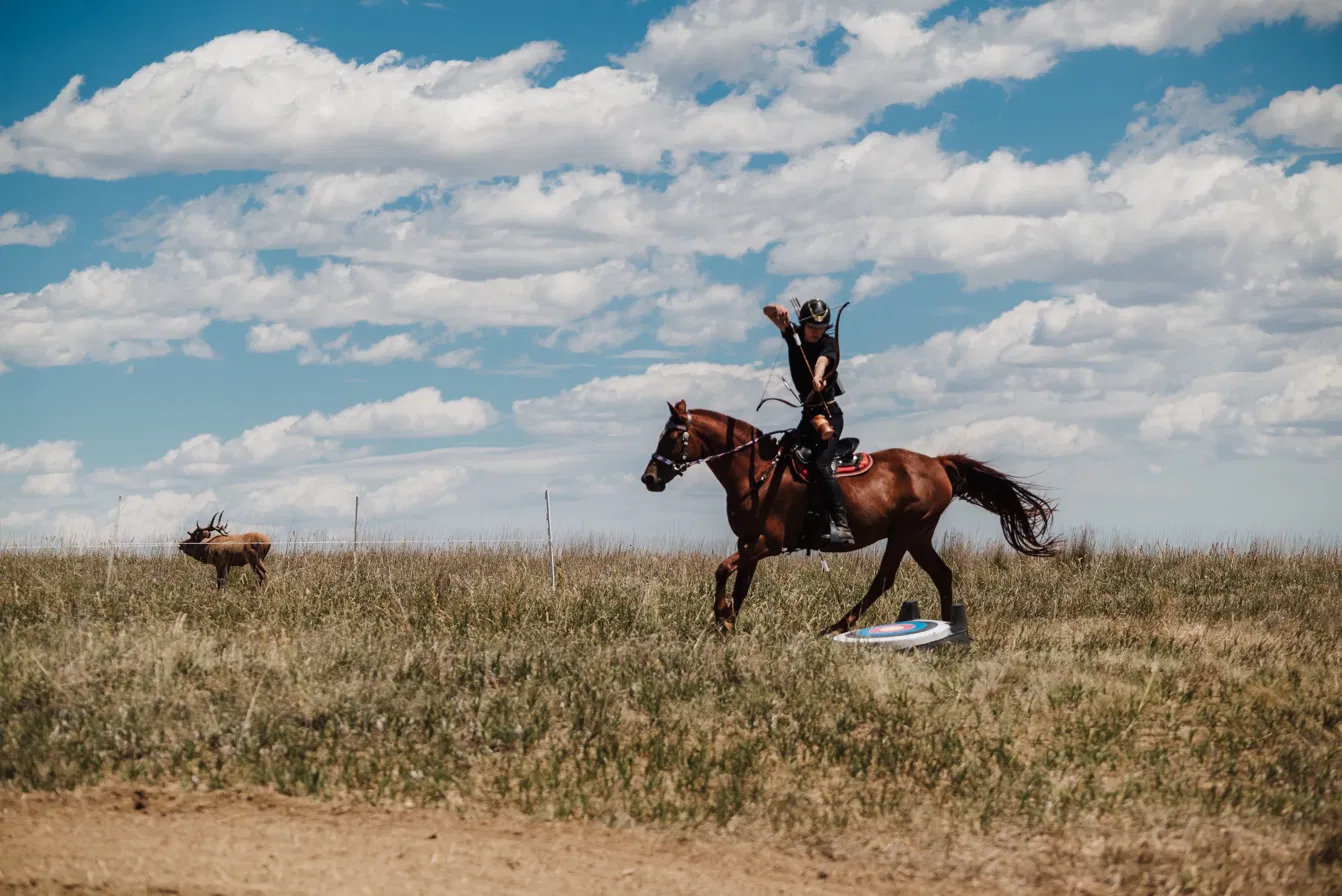
Zhikai Lai riding with a traditional bow
Zhikai Lai competed in hunt style. Image supplied by the author.

The smaller diagrams below document the 2011 versions of these layouts; their printed limits are historical, not current competition standards.
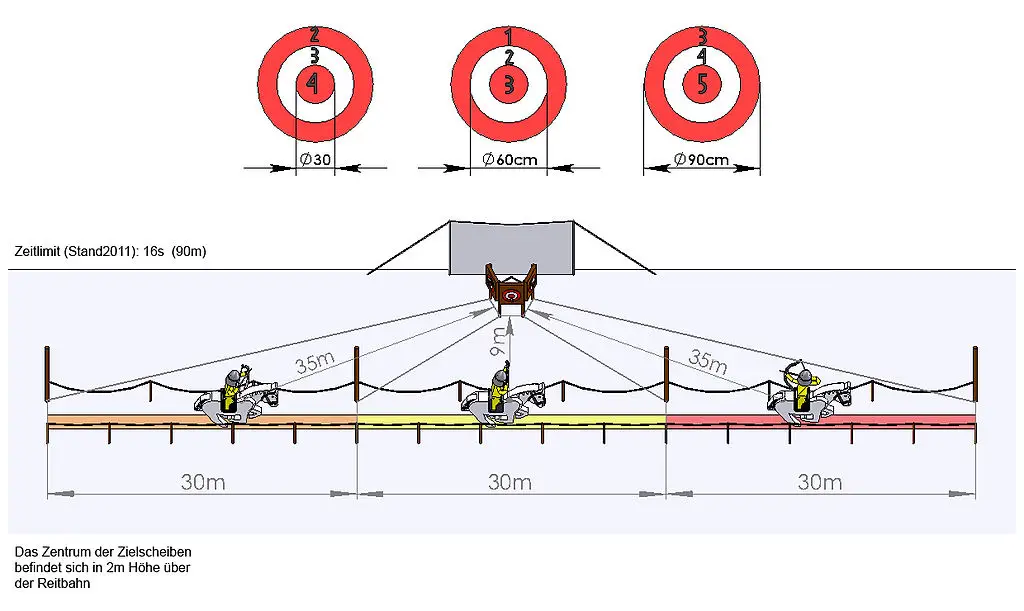
Supplied course diagram showing circular targets and forward, side, and rear shooting directions
Historical course diagram, 2011 version: circular target diameters of 30, 60, and 90 cm; a 90 m track with a 16-second time limit. The target centers are 2 m above the track.
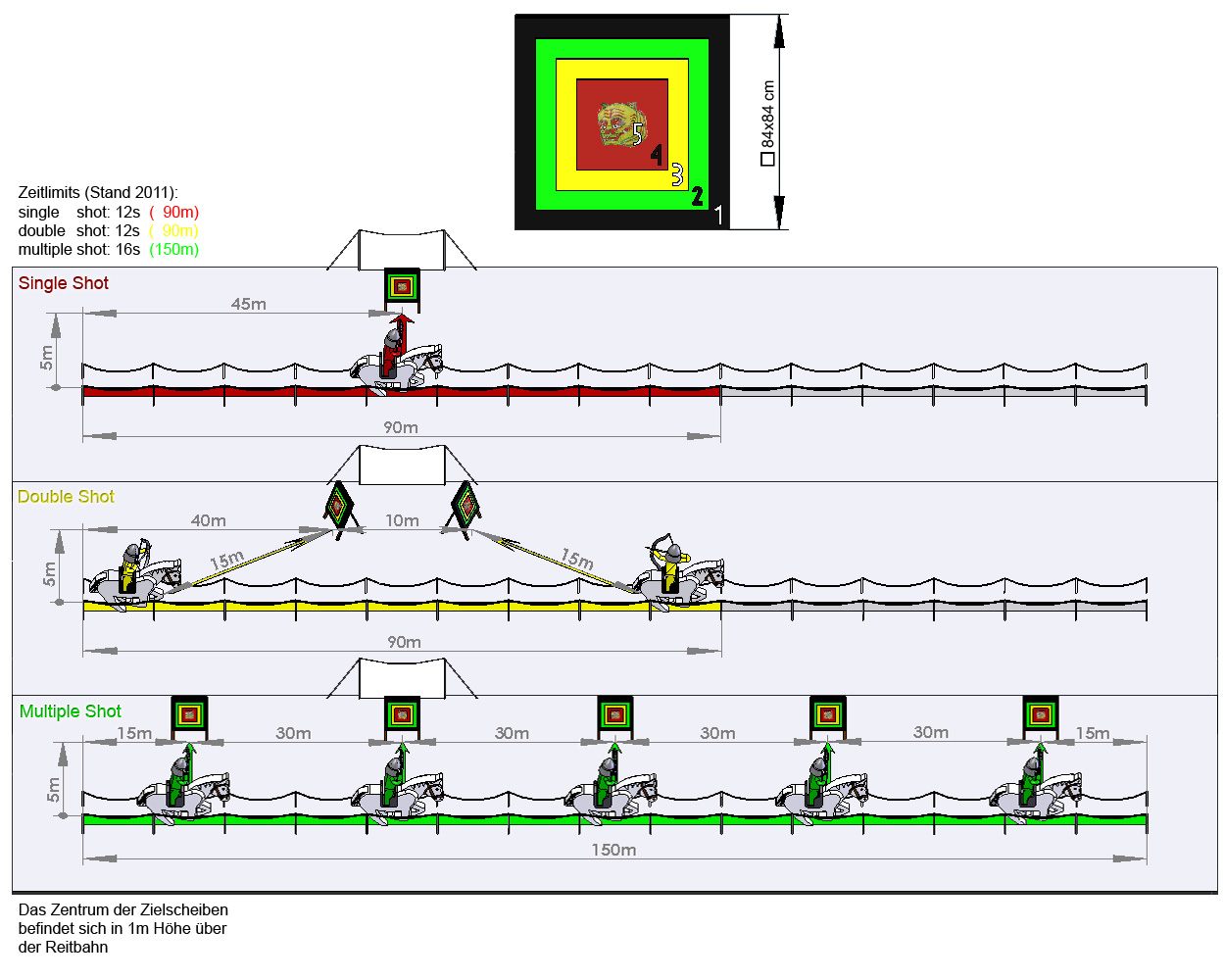
Supplied Korean style course diagram showing single, double, and multiple shots
Korean-style diagram, 2011 version: single and double shots use a 90 m track with a 12-second limit; multiple shots use 150 m with a 16-second limit. The target face is 84 × 84 cm, with its center 1 m above the track.
Explore →

Reference: modern international sport

Military transition

Firearms alter the balance

As firearms became more reliable, powerful, and easier to train in mass armies, bows gradually lost many of their battlefield advantages. The change was uneven and took centuries, but mounted archery became less central to warfare in many regions.

A useful distinction

Heritage is not the same as sport

Modern competition and historical traditions should not be collapsed into one thing. Korean style and tower are contemporary sporting formats. Yabusame is a ritual tradition with its own rules, clothing, posture, targets, and meaning. Both involve mounted archery, but they answer different cultural questions.

Shared skill does not mean shared purpose.

Ritual and heritage

What communities choose to preserve

China’s national intangible cultural heritage register includes Xibe archery in Qapqal, Xinjiang. Its official account lists mounted archery among the tradition’s forms and distinguishes martial shooting from Lishe 礼射, ritual archery concerned with conduct as well as the result of a shot.

Transmission also happens outside competition. In Qapqal, archery is taught through apprenticeships and school programmes; museums help preserve equipment and its history.

Reference: Xibe archery and cultural transmission ↗

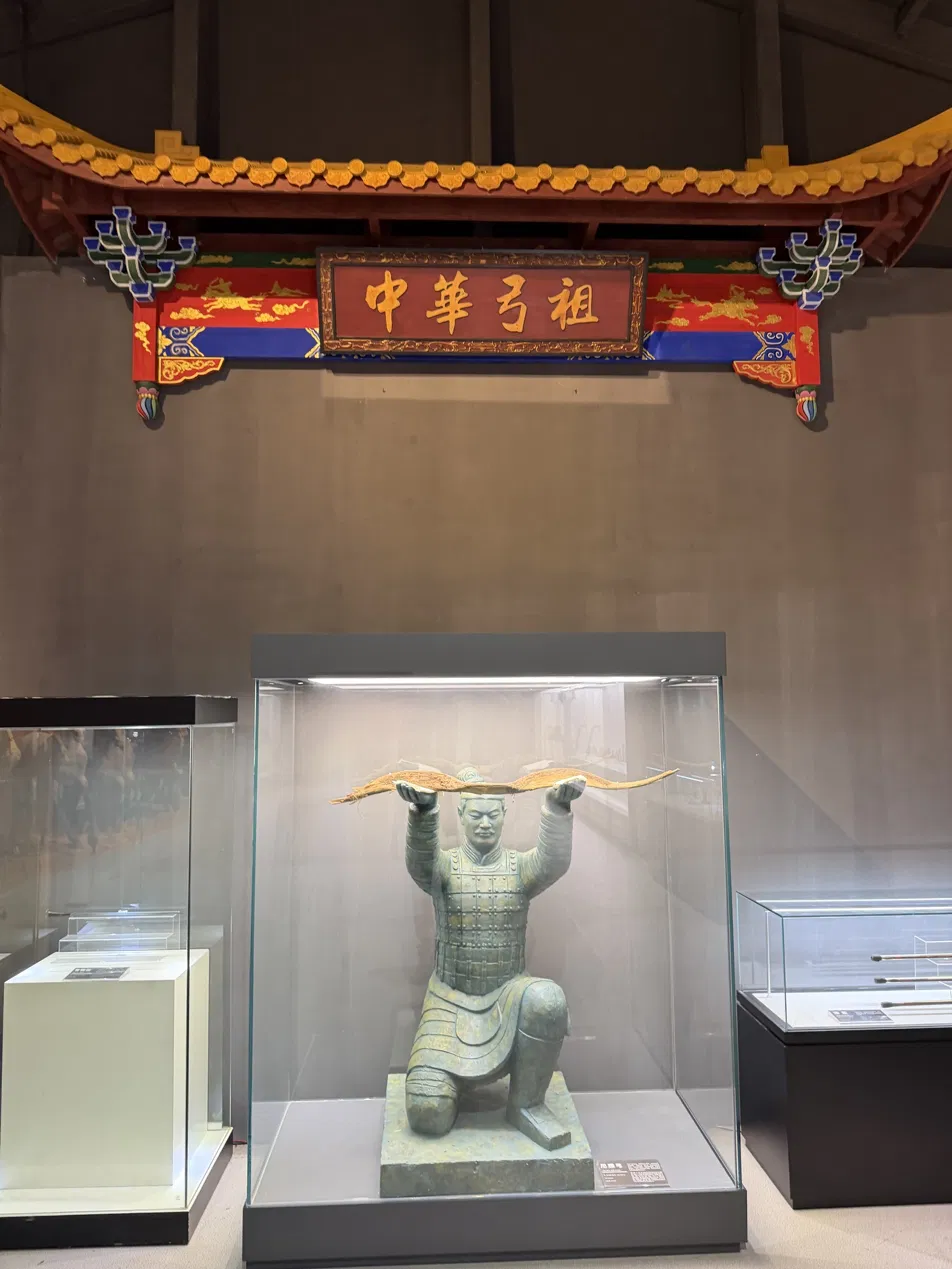
A museum display of a bow-bearing figure beneath a plaque reading Zhonghua Gongzu
Museum display beneath a 中华弓祖 plaque. Photograph by the author.
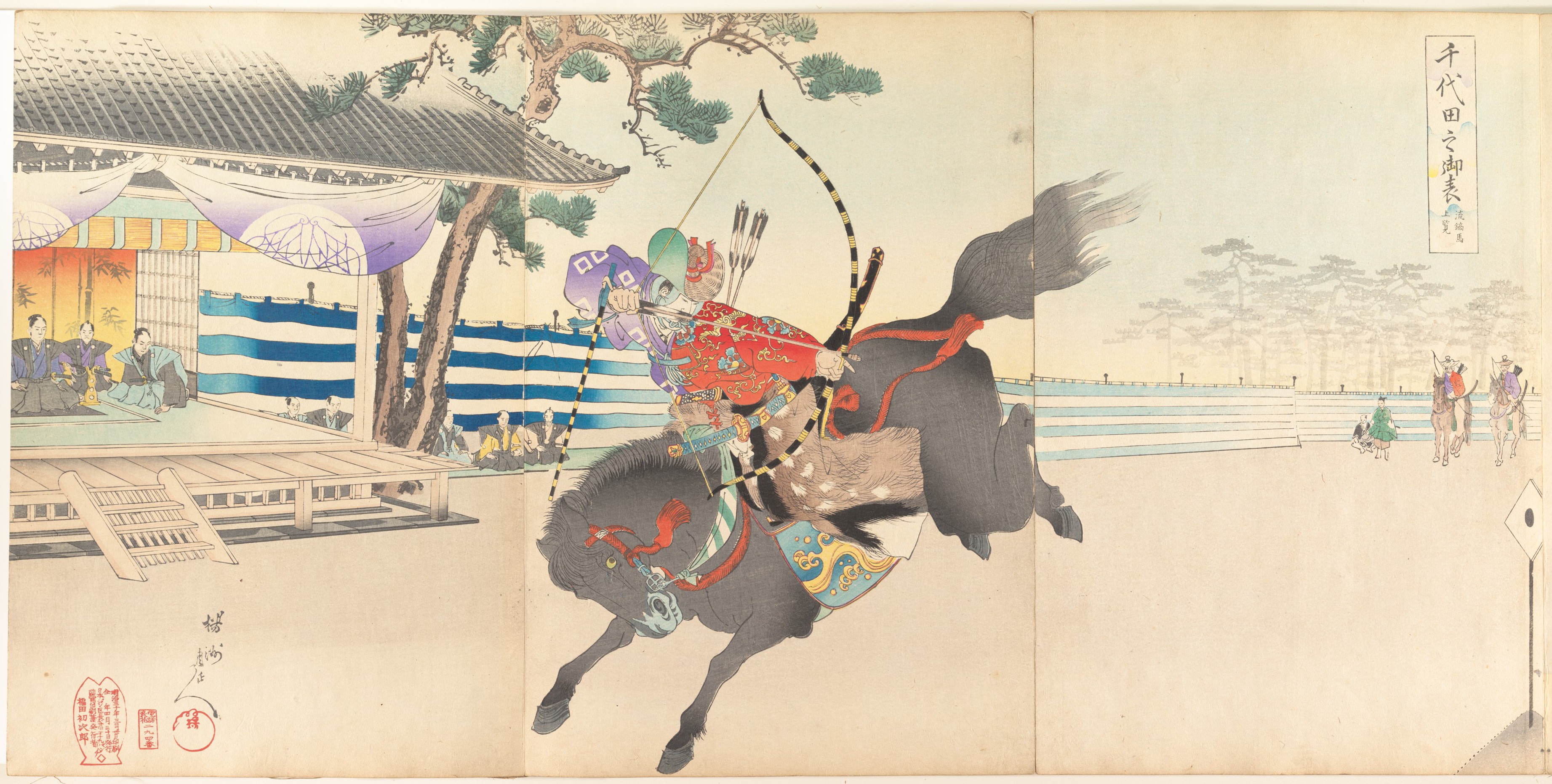
An 1897 Japanese woodblock triptych showing mounted archery at Chiyoda Castle
Yabusame at Chiyoda Castle, from Chiyoda Castle (Album of Men), 1897. Yōshū Chikanobu. The Metropolitan Museum of Art, JP3588. Public domain. Image source ↗

Yabusame sources ↗ · IHAA grading and event references ↗